
Which Material Is Right for Your Home?
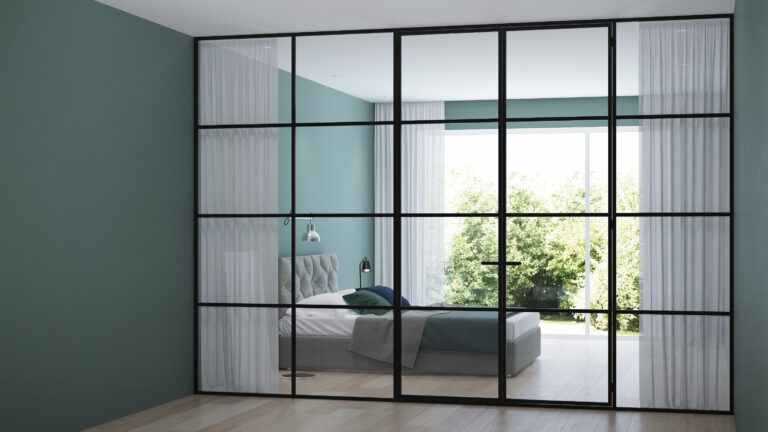
Gridded glass partitions have become one of the defining features of modern luxury architecture. Once reserved primarily for commercial buildings and historic industrial spaces, these elegant systems are now commonly found in homes as office partitions, wine rooms, shower enclosures, entryways, and room dividers.
One of the first decisions homeowners face is choosing the right metal for the partition itself. While aluminum, steel (or iron), and genuine solid bronze can all produce stunning results, each material offers distinct advantages in terms of appearance, strength, maintenance, customization, and cost.
Understanding these differences will help you choose a gridded glass system that complements both your home’s architecture and your long term investment.
Why Gridded Glass Partitions Have Become So Popular
Gridded glass partitions offer something few other building materials can achieve. They define spaces without making them feel enclosed.
Unlike traditional walls, glass partitions allow natural light to flow throughout the home while maintaining visual separation between rooms. The addition of metal grids introduces architectural character, creating a timeless appearance that works equally well in contemporary, industrial, farmhouse, transitional, and even traditional homes.
Common applications include:
- Home offices
- Wine rooms
- Dining room dividers
- Stair enclosures
- Entry vestibules
- Interior doors
- Butler’s pantries
- Shower enclosures
- Commercial offices
- Restaurants
- Retail storefronts
The biggest question isn’t whether gridded glass looks beautiful. It’s choosing the material that best fits your project.
Aluminum Gridded Glass Partitions

Aluminum has become the most common material used for residential gridded glass systems, largely because it offers an excellent balance between appearance, durability, and affordability.
Modern aluminum systems are precision extruded, allowing manufacturers to produce incredibly slim profiles that closely resemble traditional steel while remaining significantly lighter.
Advantages of Aluminum
One of aluminum’s greatest strengths is its versatility.
It is naturally corrosion resistant, making it suitable for both interior and exterior applications.
Because aluminum is lightweight, larger glass panels can often be installed with less structural reinforcement than heavier materials.
Most aluminum systems are also powder coated, allowing homeowners to choose from virtually any color imaginable.
Popular finishes include:
- Matte Black
- Custom RAL Colors
- Textured Finishes
- Metallic Finishes
Aluminum is also one of the easiest materials to fabricate, allowing for shorter lead times and greater design flexibility.
Limitations of Aluminum
Although today’s aluminum systems closely resemble steel, they are still aluminum.
If examined closely, particularly in luxury homes where craftsmanship is emphasized, aluminum lacks the depth and authenticity of genuine steel or bronze.
It is also somewhat more susceptible to dents if subjected to significant impact.
For most residential applications, however, these concerns are minimal.
Best Applications for Aluminum
Aluminum is an outstanding choice for:
- Home offices
- Interior room dividers
- Glass partitions
- Shower enclosures
- Wine rooms
- Residential entry systems
- Commercial office interiors
For homeowners seeking exceptional aesthetics without entering the premium price range of bronze or custom steel, aluminum often provides the best overall value.
Steel and Iron Gridded Glass Partitions

When people envision classic industrial architecture, they are usually picturing steel.
Steel and wrought iron have been used in architectural glazing for well over a century and continue to represent the benchmark for strength and authenticity.
True steel systems provide a richness and character that is difficult to replicate with other materials.
Advantages of Steel
Steel is incredibly strong.
Its structural capacity allows designers to create exceptionally narrow sightlines while supporting large, heavy glass panels.
Because steel is stronger than aluminum, profiles can often appear thinner while maintaining outstanding rigidity.
Steel also offers unmatched authenticity.
Many luxury homes intentionally incorporate steel because it creates a handcrafted architectural appearance impossible to duplicate using lighter materials.
The subtle welds, clean corners, and substantial feel immediately communicate quality.
Limitations of Steel
The biggest disadvantage is weight.
Steel partitions require more structural support and more labor during installation.
Fabrication is also considerably more time consuming.
Unlike aluminum extrusion, steel components are typically cut, welded, ground, finished, and painted individually.
Without proper finishing, steel is also susceptible to corrosion.
Fortunately, modern powder coating systems provide excellent long term protection when properly maintained.
Best Applications for Steel
Steel is often selected for:
- Luxury residences
- Statement entry systems
- Historic renovations
- Custom wine rooms
- Architectural focal points
- High end commercial spaces
- Designer interiors
If authenticity is your highest priority, steel remains one of the finest materials available.
Genuine Solid Bronze Gridded Glass Partitions

Solid bronze represents the pinnacle of luxury architectural metalwork.
Unlike painted finishes designed to imitate bronze, genuine architectural bronze is a solid metal that has been used in prestigious buildings, museums, banks, churches, and custom homes for generations.
Its appearance is unmistakable.
Bronze offers warmth, depth, and richness that simply cannot be replicated with painted aluminum or powder coated steel.
Advantages of Solid Bronze
Perhaps the greatest characteristic of bronze is that it becomes more beautiful with age.
Over time, bronze naturally develops a rich patina unique to each installation.
Many homeowners intentionally embrace this aging process because it gives the metal an appearance of permanence and character.
Unlike painted finishes that may eventually chip or scratch, solid bronze remains bronze throughout its entire thickness.
Minor scratches can often blend naturally into the evolving patina rather than exposing another base material underneath.
Bronze also offers exceptional corrosion resistance.
For centuries it has been used in demanding architectural environments because it performs remarkably well in both interior and exterior applications.
Limitations of Bronze
Luxury comes at a price.
Solid bronze is significantly more expensive than both aluminum and steel.
Material costs are higher.
Fabrication requires specialized craftsmanship.
Installation is more demanding due to the material’s weight and value.
Lead times are also generally longer because bronze projects are highly customized.
Best Applications for Bronze
Solid bronze is commonly specified for:
- Ultra luxury homes
- Historic estates
- High end wine rooms
- Custom entry systems
- Signature architectural features
- Boutique hotels
- Luxury commercial developments
For homeowners seeking the absolute finest architectural metal available, genuine bronze stands alone.
Comparing the Three Materials
Appearance
If appearance alone were the deciding factor, each material offers something unique.
Aluminum provides clean, modern lines with nearly unlimited color options.
Steel offers timeless industrial authenticity with unmatched architectural character.
Bronze delivers warmth, richness, and luxury that continues to evolve beautifully over time.
None is objectively better. The best choice depends entirely on the style of your home.
Strength
When comparing structural performance:
Steel is the strongest.
Bronze follows closely behind while offering excellent rigidity.
Aluminum, although extremely durable, does not possess the same structural strength as steel.
For most residential interior partitions, however, all three materials provide more than adequate performance.
Maintenance
Aluminum requires the least maintenance.
Its powder coated finish resists corrosion and typically requires only routine cleaning.
Powder coated steel also performs exceptionally well but should be inspected periodically for any damage to the finish.
Solid bronze requires almost no protective maintenance.
Instead of deteriorating, it naturally develops an attractive patina that many homeowners consider one of its greatest assets.
Cost Comparison
Budget often plays a significant role in material selection.
As a general guideline:
Aluminum is the most economical option.
Steel generally costs 30 to 60 percent more than comparable aluminum systems depending on complexity.
Genuine solid bronze may cost two to four times more than aluminum depending on the design, fabrication, and finish.
While bronze commands the highest investment, it also represents one of the most exclusive architectural materials available.
Which Material Should You Choose?
Every project has different priorities.
If you’re seeking the best balance of affordability, performance, customization, and modern aesthetics, aluminum is often the smartest choice.
If architectural authenticity, craftsmanship, and structural elegance are your priorities, steel offers timeless beauty that never goes out of style.
If you’re designing a forever home where every detail matters and you want a material that becomes more beautiful with age, genuine solid bronze is difficult to surpass.
The right decision ultimately depends on your home’s architecture, your budget, and the statement you want your space to make.
Why Professional Design Matters
Choosing the right metal is only one part of designing a beautiful gridded glass partition. Glass selection, profile dimensions, hardware, sightlines, finishes, and installation quality all work together to determine the final appearance. An experienced glass and glazing company can help you evaluate these details and ensure the finished product complements your home’s architecture while meeting your functional needs.
Transform Your Space with Architectural Glass
Whether you’re creating a sophisticated home office, an elegant wine room, a dramatic entryway, or a custom shower enclosure, gridded glass partitions add timeless beauty and architectural character that few other features can match. At Volunteer Glass & Design, we design and install custom aluminum, steel, and genuine solid bronze glass systems tailored to each client’s vision. If you’re ready to explore the possibilities, our team is here to help you compare materials, discuss design options, and create a custom solution that elevates your home for years to come.


